


We’re here to help!
After reading this if you still have questions please get in touch with us
info@terraklay.com
TerraKlay products are made in India, Tunisia, Peru, and Guatemala, by people, not factory made. We prioritize working with women artisans who have been working in their craft for generations. We are also partnering with differently abled young adults by supporting their vocational education for a sustainable livelihood possibility.
Yes. We are an online store based out of the windy city Chicago, IL.
We use natural materials and traditional, handmade techniques to create each piece. Because of this, slight variations are normal—and part of what makes every item unique.
Here’s why you may notice differences:
Natural dyeing can vary by batch.
Many of our textiles use natural dyes, and color results can shift slightly depending on the season, dye lot, water, and the natural fibers themselves. This means small differences in shade are possible from one production run to the next.
Wood is a natural material, so tones and grain will differ.
Wood can vary in color, grain pattern, and warmth—even within the same type of wood. Because it’s natural, we can’t control the exact tone you receive, and the item you get may look slightly different in color and graining than the website photos.
Hand-painted ceramics are intentionally one-of-a-kind.
Our ceramics are hand-painted, and we celebrate the subtle differences that come from the artist’s hand. These small variations honor the women artisans who paint each piece—no two will ever be exactly identical.
Hand-blown glass carries the maker’s mark.
Our glassware is hand-blown, which means you may see slight differences in shape, thickness, tiny bubbles, or surface character. These are signs of true craftsmanship and make each piece uniquely handmade.
We do our best to photograph items accurately, but lighting, screens, and the handmade nature of our products can cause the color you see online to differ slightly from what you receive.
If you’re purchasing multiple pieces and want the closest possible match, feel free to contact us—we’re happy to help.
“Perfectly Imperfect” means each piece is made by hand—not by machine—so small variations are part of the beauty.
Because our products are crafted using traditional techniques and natural materials, you may notice subtle differences such as:
slight variations in color or glaze tone
minor differences in shape, size, or brushstrokes
small natural marks in materials like wood grain
tiny characteristics in hand-blown glass (like gentle asymmetry or micro-bubbles)
These details aren’t flaws—they’re signs of authentic craftsmanship and the human hands behind every piece. We embrace them as a celebration of the artisans who create our products, making each item unique, personal, and truly handmade.
MERINO WOOL BLANKETS
Dry Clean Only.
ALL COTTON NAPKINS, TOWELS, AND APRONS
Machine wash on cold. Lay flat or hang to dry or tumble dry low.
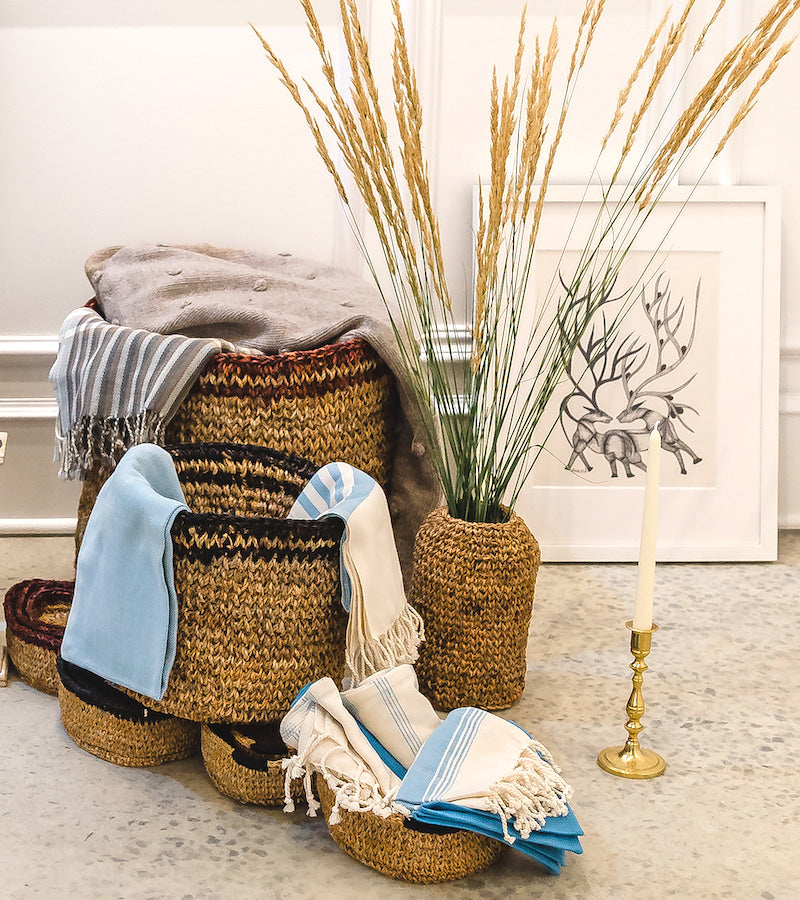
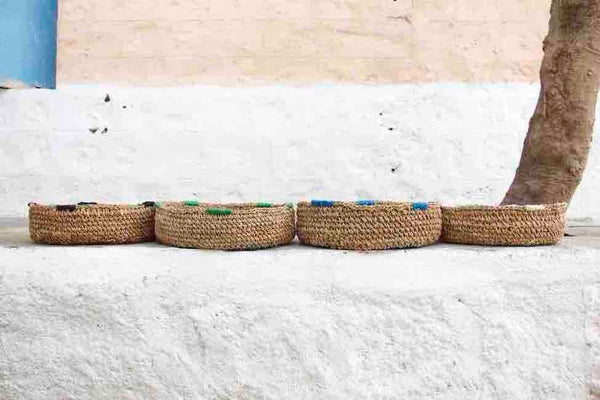
BASKETS
Wipe clean with a damp cloth.
These care instructions apply universally to all wooden items, from wooden bowls, cutting boards, and charcuterie boards to wooden utensils, ensuring each piece remains a beautiful and functional part of your home for generations.
Seasoning
Start seasoning the wood weekly for the next few months using food-quality mineral oil for a non-rancid, effective treatment. Apply liberally to the wood, let it soak for a while, then wipe off any excess with a cotton dishcloth.
Cleaning and Maintenance
If the wood is tacky or sticky, it is best to hand wash it well with warm water and dish soap, then scrub it down with a nylon scrubber. Give it an hour or two to air dry. If necessary, repeat the procedure. After drying, if the wood appears dry, use fine steel wool (No. 0000) to sand lightly while paying attention to following the grain pattern, and buff it to a soft glow with a wood preserver.
Sanitizing
To clean, hand wash your woodenware with warm water and mild soap without soaking, to prevent damage. Wood is naturally antibacterial, but for extra sanitization, a solution of one part white vinegar to five parts water, or a 50-50 vinegar-water spray, effectively controls bacteria growth. Rinse and air dry after sanitizing.
Damage Repair
If the wood gets dents or is fuzzy in texture, use steel wool or 400–600 grit sandpaper to gently sand the affected area in a grain-following manner until it's smooth. As usual, wash and dry the wood and season it, to bring it back to its original state.
Yes, all TerraKlay products are food safe. The ceramics are freehand painted using food safe paint and glaze.
They are dishwasher and microwave safe.
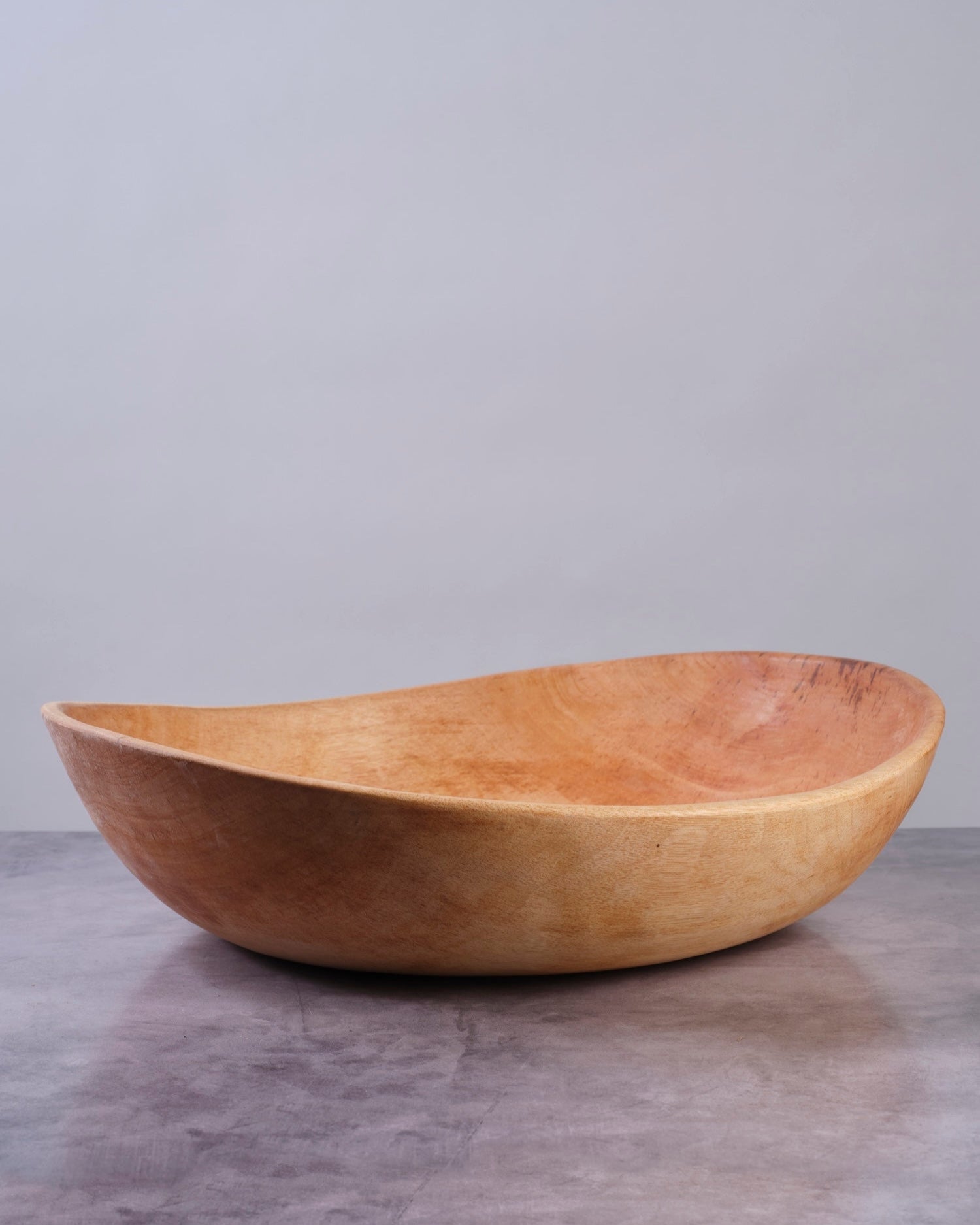
Our bowls and trenchers are crafted from Higuerilla wood, a distinctive species from the Amazon tropical forest (southern hemisphere). Unlike the seasonal Boreal species (Maple & Walnut are northern hemisphere species), Higuerilla trees retain their leaves year-round, resulting in a more uniform graining with less visible growth rings. What sets Higuerilla apart is its striking two-toned appearance—its heartwood is a rich, dark brown with red tints, contrasting sharply with the lighter, more uniform sapwood.
Higuerilla wood has a medium density of 0.42 kg/m3, comparable to Maple in terms of hardness and slightly softer than Walnut. Each piece of Higuerilla wood is uniquely cut, meaning not all bowls will exhibit this two-tonality.
Our commitment extends beyond unique wood sourcing; it involves processing each product from a single wood blank. This method not only highlights the natural beauty of the wood but also supports sustainable employment practices for Amazonian locals, helping them thrive beyond mere subsistence.
The cutting boards are made from either Caro Caro wood or Teak wood found in the Guatemala Rain Forest. Enterolobium cyclocarpum, commonly known as guanacaste, caro caro, or elephant-ear tree, is a species of flowering tree in the pea family, that is native to tropical regions of the Americas.
Teak wood is a dense, close-grained type of hardwood that is sourced from the Tectona grandis tree. Teak is originally golden in color and has a smooth grain and texture. It’s high in natural oils and rubber, meaning it’s strong, durable, and virtually impervious to extreme weather conditions and rotting, even if left untreated.
Our teak wood comes from a plantation in Guatemala, which makes it sustainable.