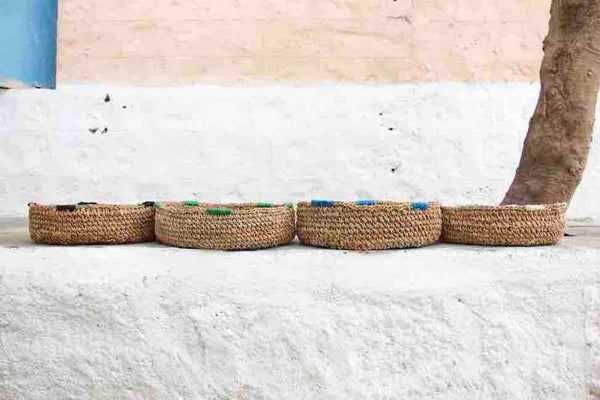
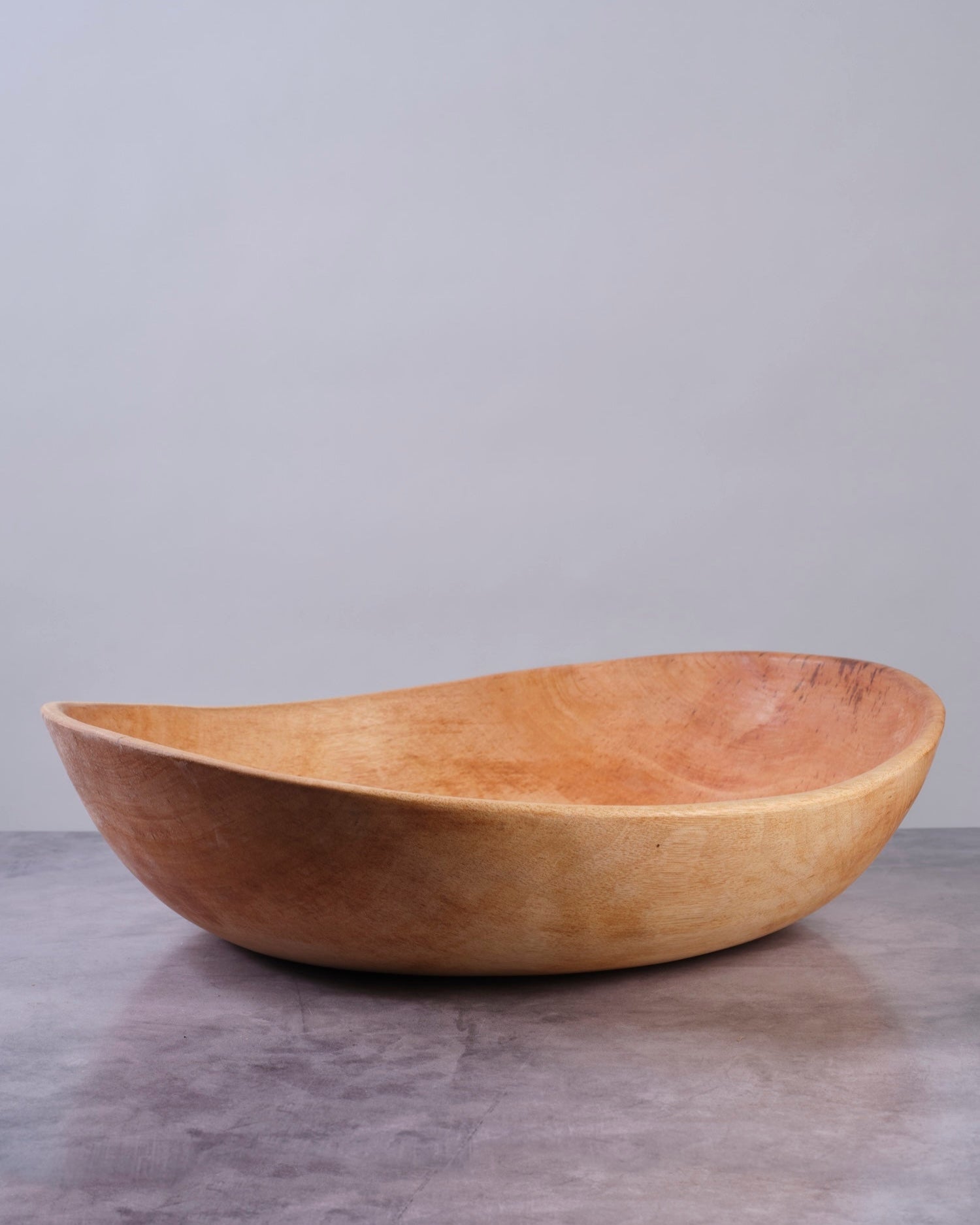
I recently returned from a show where I displayed our entire wooden bowl collection. The big ones. The really big ones. And everything in between.
Our 24-inch wooden bowls, smaller 15-inch handled bowls, dough bowls, and 21-inch serving platters. I wanted people to see what these bowls could be—not just a bowl to serve salad in, but beautiful pieces of wood, shaped by hand, with a life and character of their own.
People stopped. They looked. They touched.
They admired the grain, the knots, the texture of the wood, and even the chisel marks that tell you these bowls were carved by hand. They asked where they were made, how they were carved, what kind of wood was used, and whether they were food safe.
I heard, “Oh, what a beautiful bowl!”
“Look at the size of that!”
“I could see this on my kitchen island.”
“This would be gorgeous on my dining table.”
And then, quite often, they walked away.
Not because they didn't like the bowls. Quite the opposite. They loved them.
But then came the reasons.
“It's too big.”
“Where would I keep it?”
“My cabinets aren't big enough.”
“I already have so many wooden bowls.”
“I got one from my mother.”
“We don't cook anymore. The kids just order Uber Eats.”
“Let me think about it.”
I heard all of these. Probably a few more.
And I understood.
A wooden salad bowl isn't always an impulse purchase. Especially a large one. You don't necessarily walk into a holiday show surrounded by leather bags, jewelry, candles, perfume, chocolates, and beautiful clothing and suddenly decide that what you really need is a hardwood bowl.
A bowl is different.
You sit with it. You look at it. You run your hand over it. You imagine it in your home. You wonder where it will live, what you will put in it, and whether it belongs in your space.
And that got me thinking.
Maybe there really are 100 reasons not to buy a wooden bowl.
But what about the reasons to have one?
There is something about wood that simply cannot be replicated.
The grain is never quite the same. The knots, the natural color variations, the texture, and the marks left by the artisan make every wooden bowl unique.
You can touch it. You can feel its warmth. It doesn't feel manufactured to look exactly like the next one.
In a world where so many things are mass-produced, a handcrafted wooden bowl brings a little bit of nature indoors. A reminder that beautiful things don't have to be perfect to be extraordinary.
Sometimes, the beauty is in the imperfections.
We often talk about traditions as something we inherit. A recipe passed down. A familiar holiday ritual. A dish that appears on the table every Thanksgiving, no matter what.
But traditions have to start somewhere.
Imagine bringing out the same wooden salad bowl for every family gathering. The Thanksgiving salad. The summer tomatoes. The fruit on the kitchen island. The bread at Sunday dinner.
Years from now, someone might remember it.
“That's the bowl Mom always used.”
“We always had the salad in that bowl.”
“That bowl came out every Thanksgiving.”
We spend so much time buying things that are quickly forgotten. What if we bought one thing that became part of our family's memories?
Maybe that's how the next generation's traditions begin.
We live in a world of abundance. We have bowls, platters, containers, serving dishes, and things we bought because they were on sale, because they were cute, or because we thought we might need them someday.
But perhaps there is something to owning fewer things and choosing them more thoughtfully.
One beautiful wooden salad bowl that you bring out again and again. One piece that earns its place at the table. One that serves, gathers, holds, and gets better with time.
It doesn't need to be used every day to be useful. And it doesn't need to be hidden away waiting for a special occasion.
The best things in our homes are often the ones that become part of our everyday lives.
A large wooden bowl has a presence.
On a kitchen island, it catches your eye. On a dining table, it brings the room together. On a console, it becomes the piece that makes people stop and ask, “Where did you get that?”
You don't need to fill every corner of your home. You don't need another decorative object. Sometimes one beautiful, thoughtfully made piece is enough.
A wooden bowl can be functional, sculptural, and beautiful all at once.
And the best part? It doesn't need to be rearranged every season to make it feel relevant.
A bowl is, at its heart, a vessel for sharing.
A salad passed around the table. Fruit offered to a guest. Bread brought out for everyone. A bowl of something delicious placed in the middle, where everyone reaches in.
There is something wonderfully uncomplicated about that.
Our wooden bowls are made by hand, shaped by artisans, and inspired by the natural material they work with. They carry the marks of the process rather than hide them.
And perhaps that's what makes them special. They're not just meant to sit and be admired. They're meant to be brought out, filled, used, shared, and lived with.
 photo credit : Cindy Richter
Probably not.
But perhaps you don't need another candle, another decorative object, another thing that will eventually find its way into a drawer, either.
Perhaps what you need is one piece that makes you stop for a moment. One that reminds you of nature. One that brings people to the table. One that you will use today, next year, and perhaps one day pass on.
We understand that a wooden bowl isn't for everyone. And we certainly don't believe in buying things just for the sake of buying them.
But if a piece speaks to you, if you find yourself running your hand over the grain, imagining it on your island, or picturing it filled with food at your next family gathering, perhaps that is reason enough.
As a mother of two, with kids in their early twenties, I think about this a lot.
I know a large, handcrafted wooden bowl isn't necessarily something a young person in their twenties is going to spend their money on. It may not fit their budget, their lifestyle, or even their apartment. And that's perfectly okay. I'm not suggesting they should.
But I do think there is value in introducing them to things that are made with care, helping them understand why something is made the way it is, where it comes from, who made it, and why it might be worth keeping.
Today's younger generation is surrounded by an extraordinary amount of information, choices, trends, and products. Everything is constantly being presented to them as something they need, something they should have, or something they shouldn't miss out on. Sometimes, I wonder if in all that noise, it becomes harder to recognize what truly matters to us—and what we want to hold on to.
Maybe that's where we begin. Not with buying more, but with learning to appreciate more.
Understanding the difference between something we want for a moment and something we want to live with for years. Learning to buy less, but buy better. Choosing things that have meaning, that tell a story, that remind us of people, places, or moments in our lives.
And perhaps traditions don't have to be inherited. Perhaps we can create new ones, intentionally. A piece we bring out every holiday. A meal we make together. Something we choose to keep, use, and pass along—not because it is expensive or valuable, but because it means something to us.
I hope my children, and the next generation, learn that value isn't always measured by price, quantity, or what's trending. Sometimes it's measured by how long something stays with us, how often it brings people together, and the memories attached to it.
Make room for one beautiful thing. Make room for a tradition. Make room for gathering.
That's what we hope our bowls become.
— Manvee
Comments will be approved before showing up.