Terraklay.com banana fiber storage baskets ethically made in India for your home and  conscious lifestyle. Receive $10 off on your first order.

JOIN US!

Enjoy $10 off on your first order of $50+

Simple, enjoyable, and responsible goods and decor for your home.
*Offer valid for our first time subscribers only.

  • Log in
  • Cart (0)
  • Checkout
TerraKlay.com handmade luxury artisanal home goods and decor from global artisans.
  • Wooden Serveware
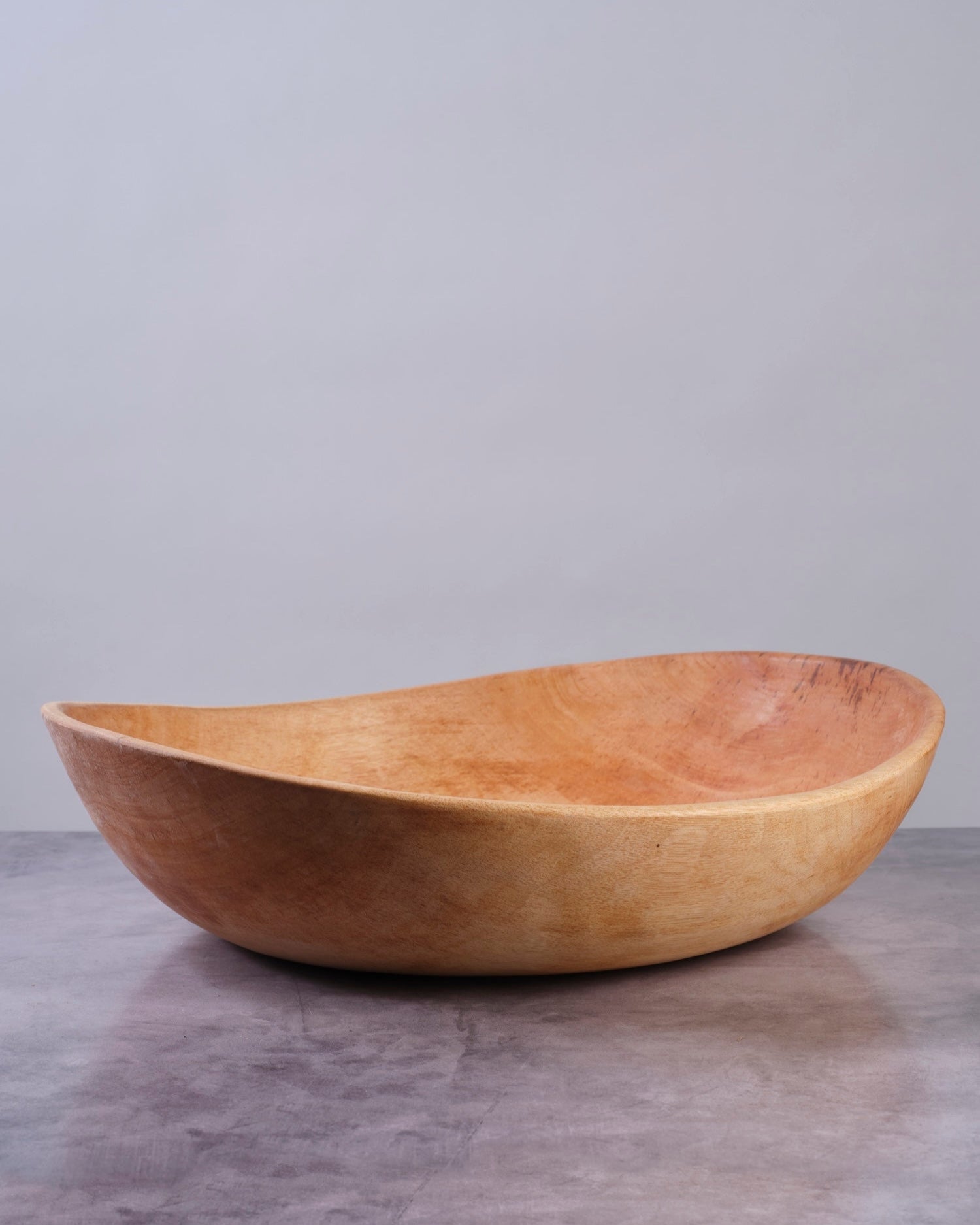
    Large 17 inch Contemporary "Wave" Wood Bowl

    Contemporary Wood Bowls

    Classic Round Wood Bowls  

    XXL 24" Classic Round Wood Bowl
    XL 20" Classic Bowl
    Large 17" Classic Round Wood Bowl
    Medium 14" Classic Round Wood Bowl
    XXL 24" Shallow Serving Bowl
    Best Sellers

    Contemporary Wood Bowls  

    XL 20" Contemporary "Wave" Bowl
    Large 17" Contemporary "Wave" Bowl
    Large 18" Serving Wood Bowl
    Rectangular XL Wooden Bowl, Tray
    Large 17" Nesting Square Wood Bowl
    Medium 14" Nesting Square Wood Bowl

    Cake Stands & Oval Bowls  

    Wood Cake Stand
    Glass Cake Plate Stand
    XXL 28" Oval Wood Bowl
    Medium 19" Oval Bowl
    Medium 15.5 inch Oval Bowl with handles
    Extra Long 29" Bowl
    Long 18 inch Wood Bowl

    Boards & Utensils  

    Utensils
    Butcher Block Cutting & Charcuterie Boards
    Large Oval Board with Glass Dome
    Wood Platters and Trays

    World's Largest Hardwood Bowls, Handcarved from a Single Wood Block

  • BASKETS & DECOR 
    • BASKETS & STORAGE
    • PLANTERS & GLASS VASES
    • ARTWORKS & BOOKS
    • Throws and Pillows
  • KITCHEN 
    • KITCHEN LINENS
    • WOOD UTENSILS & TOOLS
    • CUTTING & CHARCUTERIE BOARDS
    • COLANDERS & BOWLS
    • GLASS SERVEWARE
    • BERRY BOWLS & PITCHERS
    • MUGS & CUPS
  • TABLETOP & DINING

    Dinnerware  

    Rosette Collection
    Amira Collection
    Nigella Collection
    Haqima Collection
    Stripe Collection
    Blue Fish Collection
    Rainbow Fish Collection

    Tapas Servers & Platters

    Wood Bowls & Trenchers  

    24" Bowl
    20"Bowl
    17" Bowl
    14" Bowl
    Other Wood Bowls
    Wooden Trenchers & Platters

    Drinkware & Bar  

    Decanter & Bottles
    Margarita & Wine Glasses
    Stacking & Drinking Glasses

    TABLE LINENS  

    Cotton Napkins
    Tablecloths
    Table Runners
    Placemats and Coasters
    Best Sellers

    Mugs & Tumblers

  • Gift Ideas
  • On Sale
  • ABOUT US 
    • OUR STORY
    • ARTISAN PARTNERS
    • BLOG
    • CONTACT US
    • PRESS
  • Wooden Serveware
  • Large 17 inch Contemporary "Wave" Wood Bowl

    Contemporary Wood Bowls

    Classic Round Wood Bowls  

    XXL 24" Classic Round Wood Bowl
    XL 20" Classic Bowl
    Large 17" Classic Round Wood Bowl
    Medium 14" Classic Round Wood Bowl
    XXL 24" Shallow Serving Bowl
    Best Sellers

    Contemporary Wood Bowls  

    XL 20" Contemporary "Wave" Bowl
    Large 17" Contemporary "Wave" Bowl
    Large 18" Serving Wood Bowl
    Rectangular XL Wooden Bowl, Tray
    Large 17" Nesting Square Wood Bowl
    Medium 14" Nesting Square Wood Bowl

    Cake Stands & Oval Bowls  

    Wood Cake Stand
    Glass Cake Plate Stand
    XXL 28" Oval Wood Bowl
    Medium 19" Oval Bowl
    Medium 15.5 inch Oval Bowl with handles
    Extra Long 29" Bowl
    Long 18 inch Wood Bowl

    Boards & Utensils  

    Utensils
    Butcher Block Cutting & Charcuterie Boards
    Large Oval Board with Glass Dome
    Wood Platters and Trays

    World's Largest Hardwood Bowls, Handcarved from a Single Wood Block

  • BASKETS & DECOR 
    • BASKETS & STORAGE
    • PLANTERS & GLASS VASES
    • ARTWORKS & BOOKS
    • Throws and Pillows
  • KITCHEN 
    • KITCHEN LINENS
    • WOOD UTENSILS & TOOLS
    • CUTTING & CHARCUTERIE BOARDS
    • COLANDERS & BOWLS
    • GLASS SERVEWARE
    • BERRY BOWLS & PITCHERS
    • MUGS & CUPS
  • TABLETOP & DINING
  • Dinnerware  

    Rosette Collection
    Amira Collection
    Nigella Collection
    Haqima Collection
    Stripe Collection
    Blue Fish Collection
    Rainbow Fish Collection

    Tapas Servers & Platters

    Wood Bowls & Trenchers  

    24" Bowl
    20"Bowl
    17" Bowl
    14" Bowl
    Other Wood Bowls
    Wooden Trenchers & Platters

    Drinkware & Bar  

    Decanter & Bottles
    Margarita & Wine Glasses
    Stacking & Drinking Glasses

    TABLE LINENS  

    Cotton Napkins
    Tablecloths
    Table Runners
    Placemats and Coasters
    Best Sellers

    Mugs & Tumblers

  • Gift Ideas
  • On Sale
  • ABOUT US 
    • OUR STORY
    • ARTISAN PARTNERS
    • BLOG
    • CONTACT US
    • PRESS
News

Are Wooden Bowls and Wooden Cutting Boards Sanitary? What the Research Actually Says

September 02, 2026

Are Wooden Bowls and Wooden Cutting Boards Sanitary? What the Research Actually Says

Yes. Research has consistently found that wooden bowls and cutting boards can be more hygienic than plastic in a home kitchen. Wood isn’t a disinfectant, but it can draw bacteria into the grain, where they are deprived of moisture and gradually die off, often within 12 to 24 hours. Simply hand-wash the bowl or board and allow it to dry completely before using it again and it is safe.

Isn’t wood less sanitary than plastic? It’s the question we hear most. The instinct is understandable. Wood is porous, plastic wipes clean, and food-safety guidance has pointed toward plastic for decades.

But the research suggests that instinct has it backwards. Here’s what the studies have actually measured — and what the claim that wood is “naturally antibacterial” gets wrong.

What the research actually found

The foundational work was done by Dean O. Cliver, Ph.D., a food microbiologist who ran the experiments at the University of Wisconsin–Madison and later at UC Davis. His team set out to confirm that plastic was the more hygienic surface — the assumption behind most restaurant codes at the time — and found close to the opposite.

  • Bacteria disappeared from wood, quickly. E. coli O157:H7 and Salmonella applied to wooden surfaces were not recoverable within minutes, unless applied in extreme numbers. On new plastic, the same bacteria persisted and stayed available to contaminate the next food that touched them.
  • Knife and utensil damage broke plastic, not wood. Plastic that had been scarred in use became, in Cliver's finding, effectively impossible to clean and disinfect by hand — especially with fat residue in the grooves. Heavily used wooden surfaces behaved almost identically to new ones.
  • The bacteria inside the wood did not multiply. Cells recovered from below the surface were alive for a period but did not reproduce, and gradually died.
  • It showed up in illness data. A case-control study cited alongside the lab work found people using wooden surfaces were roughly half as likely to contract salmonellosis (odds ratio 0.42), while plastic users were about twice as likely (odds ratio 1.99).

Two honest caveats, because they matter. This body of work dates to the late 1980s and 1990s — it has held up and been revisited since, but it is not new. And it measured hand-washing at a home-kitchen scale. It is not a claim about industrial sanitation, which is a different problem with a different answer.

Why bacteria die inside wood

The mechanism is mostly physics, with some chemistry helping. Wood is a bundle of empty capillary tubes. When a washed, still-damp bowl or cutting boards sits out, the wood pulls moisture — and any bacteria suspended in it — down away from the surface. Once inside, the bacteria are in a material that is actively competing with them for water. Bacteria need free moisture to reproduce. The wood takes it.

Hardwoods also carry polyphenols and tannins that are genuinely hostile to bacteria, and species with high natural oil content add to the effect. But the chemistry is a contributor, not the main event. The drying is what does the work, and studies on hardwood surfaces put the die-off at up to 99% over 12 to 24 hours.

That timeline is the detail most product copy leaves out, and it is the one that changes what you should actually do. A bowl wiped and immediately stacked inside another bowl has not completed the process. A bowl stood where air reaches it has.

What “naturally antibacterial” gets wrong

You will find wooden serveware sold as naturally antibacterial, often with the implication that the wood sterilizes itself and washing is optional. That part is not true, and we would rather say so.

Wood's effect is slow and partial — nothing like the on-contact kill you get from a sanitizer. A wooden bowl or board that has just held raw or heavily seasoned food is contaminated, and it stays contaminated until it is cleaned and dried. No species changes that.

What the research supports is narrower and more useful: wood is unusually good at not handing bacteria back to you. That is a different property from killing them on contact, and it is the one that matters at a dinner table.

Wood versus plastic, point by point

Neither material wins outright. They fail in different places, and the honest comparison is about which failure mode you are exposed to.

Property Hardwood Plastic
Bacteria on a new surface Drawn in, die off Persist on the surface
After heavy use and scarring Behaves like new wood Grooves become very hard to hand-clean
Hand-washing effectiveness High High when new, drops sharply once scarred
Dishwasher safe No — warping and cracking Yes
Needs periodic oiling Yes No
Replace when… Deep cracks, soft spots, persistent odor Deep grooves — sooner than most people think

The rule falls out of the table: wood is more forgiving of age, plastic is more forgiving of process. A wooden bowl used weekly for thirty years is still doing its job. A plastic one used weekly for thirty years is a hazard. But a commercial kitchen that must prove sanitation to an inspector several times a day is buying repeatability, and that is what plastic sells. Most professional kitchens run plastic for exactly that reason — wood's mechanism takes 12 to 24 hours, and a line cook has minutes.

Does the species matter?

Every close-grained hardwood does the capillary-and-dry work. What changes across species is density, oil content and how well the piece holds up over decades — which in turn determines how long it stays easy to clean.

Our bowls are carved from Higuerilla (Micrandra spruceana), a dense Amazonian hardwood. Olive wood, which we use for salad servers and spoons, is one of the hardest and tightest-grained woods in a kitchen — which is why it resists staining and odor so well, and why it comes in small pieces rather than large panels. Teak, common in our cutting and charcuterie boards , behaves similarly.

The five rules that actually keep a wood bowl or wooden cutting board safe

Everything above collapses into a short routine. Skip step three in particular and none of the rest helps.

  1. Wash it promptly, by hand, in warm water with a drop of mild dish soap. Inside and out, even if you only used the inside — moisture absorbed on one face moves through the wood, and uneven drying is what warps bowls.
  2. Never put it in the dishwasher, and never let it soak. Sustained heat and saturation swell the wood, then it dries unevenly and cracks. This is the most common way a good wooden product dies.
  3. Towel-dry it, then let it finish drying in open air. This is the step that does the actual sanitizing. Give it space on both sides and leave it several hours before it goes back in the cupboard. A damp bowl or board nested or stacked is not drying — it is a reservoir.
  4. Re-oil it when the wood looks pale and dry — every four to six weeks in regular use. Use food-grade wood oil or a mineral-oil-and-beeswax conditioner. Never olive or vegetable oil: they go rancid.
  5. Keep raw protein off it. No surface removes the need for a dedicated board for raw meat and fish. Wood buys a wide margin on cross-contamination; it does not buy a free pass.

For stains, coarse salt with a cut lemon is the traditional method and it works. For odors, a baking-soda paste. Bleach solutions are reliable only after a piece has already been properly cleaned — they are not a substitute for washing. Our full routine is in the wooden bowl care guide.

When to stop using a wooden bowl or board

The mechanism depends on the wood being able to dry. A few conditions mean it no longer can:

  • A crack that goes through, as opposed to a fine surface check. A through-crack holds moisture and food where nothing can reach it.
  • Soft, dark or furry patches — the wood is staying wet.
  • A smell that survives washing and drying. Odor is bacteria or rancid oil in the grain; if a salt scrub and a full dry do not clear it, the piece is done.
  • A finish that has gone sticky or tacky — usually rancid cooking oil. Scrub it back and re-oil with a food-grade oil.

A hairline check on the rim is normal in a single-block bowl and is not a defect — wood moves with humidity. 

Frequently asked questions

Are wooden salad bowls or boards sanitary?

Yes. In a home kitchen with hand-washing, research has found wooden surfaces more hygienic than plastic — particularly once both are scarred from use, which is when plastic becomes very difficult to clean and wood keeps behaving like new. Wash by hand and dry fully between uses.

Is it healthy to eat from wooden bowls?

Yes, provided the bowl is finished with a food-safe oil and kept clean and dry. Wood carries no coating that can flake, leach or scratch off into food the way some treated or worn synthetic surfaces can. Avoid unsealed softwoods and anything finished with a product not rated for food contact.

Are wooden bowls or boards food safe?

Yes, when made from a close-grained hardwood and finished with a food-grade oil. Ours are finished with food-safe oil and need re-oiling every four to six weeks in regular use to stay that way.

Does wood kill bacteria?

Not on contact. Wood draws bacteria below the surface by capillary action, where they lose access to moisture and die off over roughly 12 to 24 hours as the wood dries. It is a drying process, not a disinfectant, and it does not replace washing.

Is wood more sanitary than plastic?

In a hand-washed home kitchen, the research says yes, and the gap widens as both surfaces age — scarred plastic is very hard to clean, while used wood performs almost like new. In commercial kitchens plastic is usually preferred because it can be sanitised quickly and verifiably on a schedule.

Do olive wood and acacia bowls need different care?

No — the routine is the same for all close-grained hardwoods: hand-wash, dry fully, re-oil periodically, never soak or use a dishwasher. Denser and oilier woods like olive resist staining and odour a little better, so they may need oiling slightly less often.


Source and attribution. This article was prompted by “Is Wood Antibacterial?”, produced and presented by Nick Engler for Workshop Companion, also published on YouTube.

The video raises the question and reaches the same conclusion — wood is antibacterial, but, in Engler's words, “not to the extent you might hope for.” It is credited here as the originating source, and quotation is limited to the video's own published description. Engler is the author of more than fifty woodworking titles, including the Workshop Companion series.

Supporting research is cited independently: Dean O. Cliver, Ph.D., “Plastic and Wooden Cutting Boards” (Food Safety Laboratory, UC Davis); and Cliver et al., “Cutting boards in Salmonella cross-contamination” (PubMed). Nothing here is medical advice; commercial food operations should follow their local health authority.

Shop the wood bowl collection, or start with the 20" Classic Round.

Shop the cutting board collection


Tweet Share Pin It Email

Leave a comment

Comments will be approved before showing up.

Also in News

Sustainable Hostess and Housewarming Gifts, by Occasion and Budget

September 08, 2026

Continue Reading

Heirloom Wedding Gifts: Why a Hand-Carved Wooden Bowl Is the One They'll Still Be Using in Forty Years

September 01, 2026

Continue Reading

Why Wooden Bowls Vary in Color: Heartwood vs Sapwood

August 22, 2026

Continue Reading

HELP
  • FAQ
  • SHIPPING
  • REFUND POLICY
  • TERMS
  • AFFILIATES
  • GIFT CARD
Sign up for our newsletter

Get $10 off your first order and get the latest on sales, new releases and more…

Get In Touch

Info@TerraKlay.com

Contact Form


© 2026 TerraKlay. Powered by Shopify